The Museum of Cycladic Art (Athens, Greece) presents its new archaeological exhibition under the title ‘Princesses’ of the Mediterranean in the dawn of History. The exhibition presents 24 examples of ‘princesses’ from Greece, Cyprus, Southern Italy, and Etruria from 1,000 to 500 BC, and over 500 artefacts.
Royal ladies or princesses; priestesses or healers; women of authority or knowledge; local women, who stood apart from the rest; other women, who accepted and adopted the cultural traits of different societies or of the men they married in their homeland – local or foreign men – or even those women, who for reasons of intermarriage, traveled from one place to another, are the women this exhibition examines.
This exhibition presents real women. Not mythical or other figures. Women who were born, who lived; women of flesh and bone. Or, even better, women whose material remains, their bones, survive and ‘speak’ after thousands of years.
The displayed assemblages comprise bronze vases, bronze and iron implements (ladles, spoons, cart models), glass and faience objects, terracotta, bronze, and ivory figurines, and, mostly, jewellery: gold, silver and bronze breastplates, belts, bracelets and armbands, earrings, finger rings, hair pins, and necklaces; bronze, iron, or silver fibulae; beads of faience, amber, precious and semi-precious stones, such as amethyst, carnelian, rock crystal, and Egyptian blue; scarabs made of various materials; gold masks; various pins and pendants.
The Lady of Lefkadi in Euboea, the Wealthy Athenian Lady from the Areopagus, the famous Picenean queen from Sirolo-Numana near modern Ancone, burials from Verucchio and Basilicata in Italy, from Eleutherna in Crete, from Sindos in Thessaloniki are only a few examples of the exhibition which dazzles with its wealth of objects.
The famous wooden throne of a dead princess from a tomb at Verruchio (Italy) completes the display.
Museum of Cycladic Art
Exhibition duration: 13 December 2012 – 10 April 2013
For more information click HERE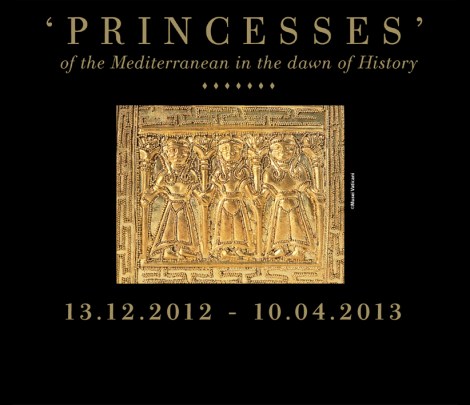
 City Break In Athens